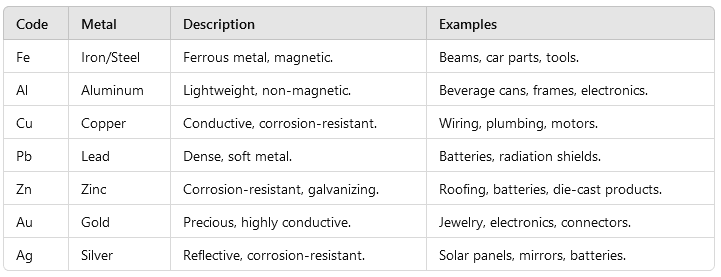

Understanding Metal Recycling Codes
Metal recycling codes are an essential part of the recycling process, helping identify and classify different types of metals for efficient recycling. These codes ensure that metals are processed correctly and reused in the most environmentally friendly way. Below is an in-depth look at metal recycling codes and their significance.
What Are Metal Recycling Codes?
Metal recycling codes are symbols or numbers used to categorize metals based on their type, composition, and recyclability. These codes are often found on products, packaging, or labels to guide consumers and recyclers.
Types of Metal Recycling Codes
Ferrous Metal Codes
- Symbol: Often represented by a magnet icon or the letters “Fe.”
- Description: Indicates metals containing iron, such as steel and cast iron.
- Examples:
- Steel: Found in appliances, car parts, and construction materials.
- Cast Iron: Used in pipes and heavy machinery.
Non-Ferrous Metal Codes
- Symbol: Typically includes letters like “Al” (Aluminum) or “Cu” (Copper).
- Description: Refers to metals that do not contain iron.
- Examples:
- Aluminum: Used in beverage cans, car parts, and window frames.
- Copper: Found in electrical wiring and plumbing.
Precious Metal Codes
- Symbol: May include abbreviations like “Au” (Gold) or “Ag” (Silver).
- Description: Represents valuable metals used in electronics and jewelry.
- Examples:
- Gold: Found in circuit boards and high-end electronics.
- Silver: Used in solar panels and mirrors.
Recyclable Product Codes
- Symbol: A recycling triangle with a number inside or below it.
- Description: Indicates the type of metal or alloy used in the product.
- Examples:
- Aluminum Cans: Code “ALU.”
- Steel Products: Code “STEEL.”
Why Are Recycling Codes Important?
Streamlining Recycling Processes
- Recycling codes help facilities sort and process metals more efficiently.
Improving Metal Recovery Rates
- Clear identification prevents contamination and ensures high-quality recycled materials.
Environmental Benefits
- Proper coding reduces waste and energy consumption during the recycling process.
Consumer Awareness
- Codes educate consumers on how to dispose of products responsibly.